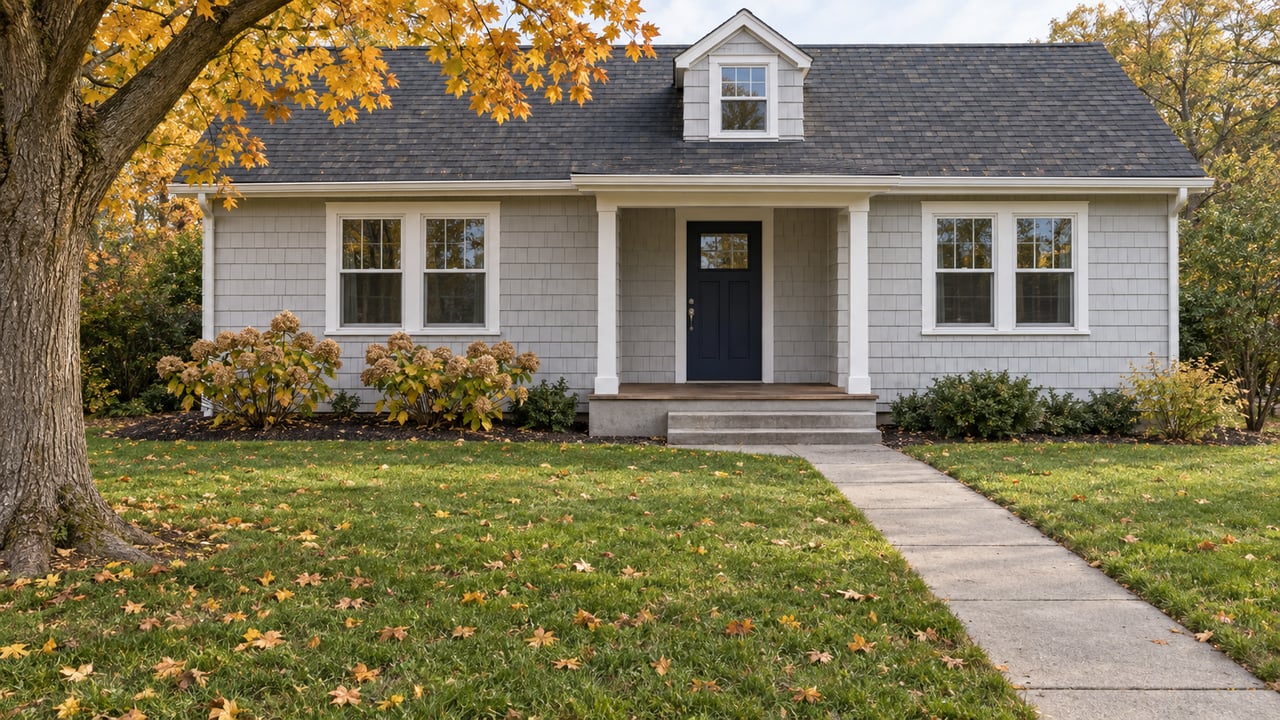
Thinking about buying a duplex or fourplex in Chippewa County? You are not alone. Small multifamily properties can offer a practical path to homeownership, rental income, or long-term investing, but this is also a market where inventory is limited and details matter. If you want to understand what is realistic in Chippewa County, how rents may pencil out, and where buyers need to be careful, this guide will walk you through it. Let’s dive in.
What small multifamily looks like here
In Chippewa County, small multifamily investing usually means duplexes, triplexes, or fourplexes rather than large apartment buildings. The county housing stock is still dominated by detached single-family homes, which make up about 75.3% of housing units.
By comparison, 2-unit homes account for about 4% of the stock, and 3- or 4-unit buildings also account for about 4%. That matters because it means you should expect fewer true small multifamily opportunities on the market than you would in a more urban area.
For buyers, that creates a simple reality. You may need to stay flexible, move quickly when a good property appears, and search across Chippewa Falls, Hallie, and nearby jurisdictions instead of focusing on just one pocket of the county.
Why Chippewa County can appeal to investors
A smaller inventory does not automatically mean a weak opportunity. In fact, tighter supply can support steady demand when you find a property that is priced well and located in an area with consistent renter interest.
Chippewa County also shows signs of a relatively tight rental market. A secondary housing dataset reports a 2% rental vacancy rate, which suggests that available rental units are not sitting empty for long in many cases.
There is also some useful market movement data on the sales side. Median days on market was reported at 42 days in April 2026, down from 111 days in January 2026, which shows how quickly conditions can shift month to month.
Rent benchmarks to use
If you are underwriting a small multifamily purchase, you need a realistic rent baseline. For Chippewa County, HUD’s FY2026 Fair Market Rent schedule places the area at:
- $932 for a studio
- $962 for a 1-bedroom
- $1,181 for a 2-bedroom
- $1,582 for a 3-bedroom
- $1,588 for a 4-bedroom
These figures are useful as reference points, not promises. HUD defines fair market rent as the 40th percentile gross rent for standard-quality units, and gross rent includes both rent and utility costs.
That means you should be careful not to treat these numbers as automatic asking rents. Condition, layout, updates, utility setup, and exact location still affect what a property may realistically bring in.
What a duplex might pencil out to
For a quick example, a duplex with two 2-bedroom units could pencil to about $2,362 per month in gross rent using the HUD benchmark. A duplex with two 1-bedroom units could pencil to about $1,924 per month in gross rent.
Those are simple FMR-based estimates, and they are best used as a starting point. When you evaluate a specific property, you still need to review actual unit condition, current leases if occupied, utility responsibilities, and any deferred maintenance that could affect your numbers.
There is also a practical product-type takeaway in the county data. Occupied rental demand appears strongest in smaller units, with 2-bedroom rentals leading, followed by 3-bedroom and 1-bedroom rentals, while studios are a much smaller segment.
Unit sizes that may make the most sense
If you are comparing one small multifamily option against another, unit mix deserves close attention. In Chippewa County, the available rental data points to stronger demand in 1-bedroom and 2-bedroom units than in studios.
That does not mean larger units cannot perform well. It simply means that smaller layouts may align more closely with the county’s existing occupied rental demand, which can help when you are estimating future leasing potential.
When inventory is limited, this kind of detail helps you compare opportunities more clearly. A clean duplex with practical 1-bedroom or 2-bedroom units may deserve extra attention because it fits the demand profile more closely.
Financing paths for owner-occupants
One of the biggest advantages of small multifamily investing is that you may be able to buy a property as an owner-occupant. If you live in one unit and rent the others, you may gain access to financing options that are more favorable than a pure non-owner-occupied investment loan.
HUD says FHA-insured mortgages can be used for 2- to 4-unit properties that meet property standards, with a minimum required investment of 3.5% in most cases. FHA’s single-family program is for owner-occupied principal residences, so this path is generally tied to living in the property yourself.
Fannie Mae also allows rental income from a 2- to 4-unit principal residence to be used in qualifying. For many duplex buyers, that is a major advantage because projected rental income can strengthen the financing picture.
What conventional and WHEDA buyers should know
Conventional financing for small multifamily is often more conservative. Freddie Mac lists a 75% maximum loan-to-value ratio for 2- to 4-unit primary residences, which can mean a larger down payment than some buyers expect.
In Wisconsin, WHEDA can be especially important for buyers exploring owner-occupied 2- to 4-unit purchases. WHEDA says these loans must be owner-occupied for the life of the loan, and 2- to 4-unit purchases require pre-purchase landlord education.
WHEDA’s conventional matrix calls for a 3% borrower contribution and 6 months of reserves on 2- to 4-unit purchases. WHEDA also notes that down payment assistance can help eligible borrowers reach up to 100% financing on qualifying combinations, while its FHA matrix also allows 2- to 4-unit purchases with owner occupancy.
One financing option that usually does not fit
Some buyers ask whether USDA financing can work for a duplex strategy in a more rural county. In most small multifamily investment scenarios, it is usually not the right fit.
USDA Section 502 Guaranteed Loans are for a primary residence in eligible rural areas and cannot be used for an income-producing property. If your goal is to offset your housing costs with rental income from a duplex or fourplex, you will usually want to look more closely at FHA, conventional, or WHEDA pathways instead.
Local zoning matters more than many buyers expect
In Chippewa County, one of the biggest due diligence issues is not rent. It is zoning and permits.
The county planning office administers county, state, and federal land-use codes and offers online and paper permit applications. The approval path can change based on the parcel location, which is why buyers should confirm jurisdiction early.
For example, Chippewa County’s rezone and conditional-use information separately lists Chippewa County hearings and Lake Hallie schedules. In Chippewa Falls, all building projects require permits, and the city states that a project must conform to zoning before a building permit is issued.
The Town of Hallie has its own forms and permits page as well. In plain terms, you cannot assume the same rules apply everywhere just because the property has a Chippewa County address.
A smart due diligence checklist
Before you make an offer on a small multifamily property in Chippewa County, it helps to slow down and verify the basics. A short checklist can save you from expensive surprises later.
Here are key items to confirm:
- Property jurisdiction
- Current zoning classification
- Whether the current use is allowed as-is
- Whether any future changes would require rezoning or conditional use approval
- Building permit history if improvements were made
- Unit count and bedroom count
- Utility setup and who pays what
- Current leases, if tenant-occupied
- Repair needs and deferred maintenance
- Reserve requirements tied to your financing
This is where local experience matters. A property that looks straightforward online may have details at the county, city, or town level that affect financing, renovation plans, or future rental use.
New supply is present, but not overwhelming
Investors often worry about whether new construction will flood the rental market. In Chippewa County, the available data suggests ongoing supply, but not at a scale that clearly overwhelms the small-rental segment.
The county had 364 private housing structures authorized by building permits in 2024. That shows continued development activity, but it does not point to an obvious oversupply problem for small multifamily buyers based on the information available here.
For practical planning, that means you should still underwrite carefully, but you do not need to assume a wave of new inventory will automatically undercut every duplex or fourplex opportunity.
Is Chippewa County a good fit for you?
If you want a market packed with multifamily inventory, Chippewa County may feel limited. Small multifamily exists here, but it is a minority product, so your search may take more patience and a wider geographic lens.
If you want a practical owner-occupant strategy, though, this market can make sense. Tight rental conditions, clear HUD rent benchmarks, and owner-occupied financing paths can create a solid framework for buyers who are prepared to do careful property-by-property analysis.
The key is staying realistic. In Chippewa County, successful small multifamily investing is usually less about chasing volume and more about recognizing a good opportunity when it appears, running the numbers carefully, and checking local zoning before you move forward.
When you are ready to explore duplexes, fourplexes, or other investment-minded opportunities in the Chippewa Valley, working with an experienced local advisor can make the process much clearer. If you want steady guidance grounded in the local market, connect with Wanda Johnson.
FAQs
What types of small multifamily properties are common in Chippewa County?
- In Chippewa County, small multifamily usually means duplexes, triplexes, and fourplexes. They are a much smaller share of the housing stock than detached single-family homes, so inventory is typically limited.
What are HUD fair market rent benchmarks for Chippewa County?
- HUD’s FY2026 fair market rent benchmarks for Chippewa County are $932 for a studio, $962 for a 1-bedroom, $1,181 for a 2-bedroom, $1,582 for a 3-bedroom, and $1,588 for a 4-bedroom. These are reference points, not guaranteed asking rents.
Can you use FHA financing for a duplex in Chippewa County?
- Yes, FHA-insured mortgages can be used for 2- to 4-unit properties that meet property standards if you will occupy the property as your principal residence. HUD says the minimum required investment is 3.5% in most cases.
Can rental income help you qualify for a small multifamily purchase?
- Yes, Fannie Mae says rental income from a 2- to 4-unit principal residence can be used in qualifying. This can be a major advantage for owner-occupant buyers.
What should you check before buying a duplex or fourplex in Chippewa County?
- You should confirm the parcel’s jurisdiction, zoning, permit requirements, allowed use, utility setup, lease terms if occupied, and any repair or reserve requirements tied to your financing. Local rules can differ between Chippewa County, Chippewa Falls, Hallie, and other jurisdictions.
Is Chippewa County a tight rental market for small multifamily investing?
- The available data reports a 2% rental vacancy rate, which generally points to a tighter rental market. That can support demand, but each property still needs careful underwriting and due diligence.